For the past several years, the explosive growth of artificial intelligence has been inextricably tethered to the cloud. Whenever a user drafted a complex prompt, synthesized code, or generated high-resolution media, that request was almost certainly shipped across fiber-optic cables to a massive, power-hungry data center packed with server-grade accelerator racks.
That paradigm is undergoing its most radical transformation yet.
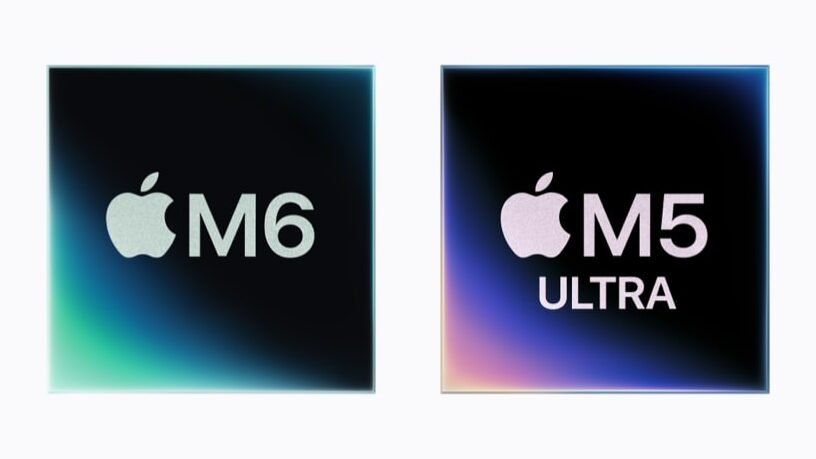
With the unveiling of the M6 chip in the redesigned Mac mini (starting at $899) and the powerhouse M5 Ultra in the new Mac Studio, Apple is aggressively advancing an alternative vision: local, on-device AI compute at scale.
How much AI computation can now be performed locally on a desk instead of being offloaded to a multi-billion-dollar data center?
By pairing cutting-edge manufacturing processes with an unprecedented architectural milestone—specifically the M5 Ultra’s massive 512GB of unified memory operating across 1.2TB/s of memory bandwidth—Apple isn’t just updating personal computers. It is establishing a self-contained local AI compute platform that changes the economics, latency, and privacy profile of artificial intelligence for consumers, developers, and enterprise teams alike.
Apple M6 and M5 Ultra: What Has Changed?
Apple’s latest silicon rollout attacks on-device AI from both ends of the computing spectrum.
- The M6 democratizes everyday agentic workflows and local large language model (LLM) inference on a mainstream consumer desktop by adopting the industry’s first 2nm process node.
- The M5 Ultra redefines workstation-class capability by fusing four discrete dies into a single, unified computing engine capable of loading frontier-class models directly into RAM.
Apple M6 at a Glance
The standard M6 represents Apple’s debut on the 2nm manufacturing node, packing extreme transistor density into an ultra-efficient thermal envelope.
| Specification | Apple M6 |
| Process Node | 2nm |
| CPU Configuration | 12-core (2 Super, 4 Performance, 6 Efficiency) |
| GPU Configuration | 12-core with per-core Neural Accelerators |
| Neural Engine | Dual 16-core (up to 2x peak compute vs. previous gen) |
| Unified Memory | Up to 32GB |
| Memory Bandwidth | Up to 170GB/s |
| AI Architecture | Dual Neural Engine + GPU Neural Accelerators + Native Hardware FP8 |
The M6 introduces a restructured 12-core CPU complex featuring two high-frequency “Super cores” alongside dedicated performance and efficiency cores.
Crucially for AI practitioners, the M6 introduces native hardware support for FP8 (8-bit floating point) data types. Rather than relying on software translation layers or quantization workarounds, the silicon handles 8-bit weights natively. This doubles effective throughput and slashes the memory footprint required for everyday inference, letting a sub-$1,000 desktop run distilled open weights without breaking a sweat.
M5 Ultra at a Glance
If the M6 is an exercise in consumer efficiency, the M5 Ultra is a brute-force workstation triumph. It is Apple’s first quad-die architecture, tying two dual-die M5 Max packages together via next-generation UltraFusion interconnects.
| Specification | Apple M5 Ultra |
| Architecture | Quad-die system-on-a-chip (SoC) |
| CPU Configuration | Up to 36-core (12 Super, 24 Performance) |
| GPU Configuration | Up to 80-core with integrated Neural Accelerators |
| Neural Engine | 32-core |
| Unified Memory | Up to 512GB |
| Memory Bandwidth | 1.2TB/s |
| Die Interconnect | UltraFusion (4.4TB/s inter-die bandwidth, 6x connection density) |
| Clustering | Thunderbolt 5 Multi-Machine Fabric Support |
| Primary AI Target | Hundreds-of-billions parameter frontier models entirely on-device |
┌─────────────────────────────────────────────────────────┐
│                   APPLE M5 ULTRA                        │
│                                                         │
│   ┌───────────────────┐         ┌───────────────────┐   │
│   │     M5 Die 1      │◄───────►│     M5 Die 2      │   │
│   └─────────▲─────────┘ Ultra   └─────────▲─────────┘   │
│             │           Fusion            │             │
│             ▼           4.4TB/s           ▼             │
│   ┌───────────────────┐         ┌───────────────────┐   │
│   │     M5 Die 3      │◄───────►│     M5 Die 4      │   │
│   └───────────────────┘         └───────────────────┘   │
│                                                         │
│  [  512GB UNIFIED MEMORY POOL  |  1.2 TB/s BANDWIDTH  ]  │
└─────────────────────────────────────────────────────────┘
The M5 Ultra’s headline figure is its 512GB unified memory capacity. By allowing the 80-core GPU, the 36-core CPU, and the 32-core Neural Engine to draw from a shared pool of 512GB of RAM at 1.2TB/s, Apple has eliminated the traditional memory-transfer bottlenecks that plague standard PC workstations.
Why Unified Memory Matters for AI
To understand why Apple’s silicon design is uniquely suited for machine learning, one must understand the anatomy of AI inference.
An LLM is composed of hundreds of millions, billions, or hundreds of billions of mathematical parameters (weights). Before a model can generate a single word, its entire weight matrix must reside in active, high-speed memory. When an inference request is made, the processor must cycle through every single parameter to compute next-token probabilities.
TRADITIONAL ARCHITECTURE (Bottlenecked)
┌──────────────┐     PCIe Bus (Slow Pipe)     ┌──────────────┐
│  Host CPU    │ ═══════════════════════════► │ Dedicated GPU│
│  System RAM  │                              │     VRAM     │
└──────────────┘                              └──────────────┘
                       Duplicate Transfers

APPLE UNIFIED MEMORY (Zero-Copy)
┌────────────────────────────────────────────────────────────┐
│                    Single Memory Fabric                    │
│                 [ 512GB Unified Memory ]                   │
│                                                            │
│       ▲                       ▲                    ▲       │
│       │                       │                    │       │
│   ┌───┴───┐               ┌───┴───┐            ┌───┴───┐   │
│   │  CPU  │               │  GPU  │            │  NPU  │   │
│   └───────┘               └───────┘            └───────┘   │
└────────────────────────────────────────────────────────────┘
In traditional x86 workstation architectures, the CPU and GPU operate out of discrete memory silos:
- The host system has standard RAM (e.g., DDR5).
- The dedicated graphics card has video memory (VRAM, like GDDR6 or HBM).
- Any data processed by the GPU must be copied from system RAM across a PCIe bus into VRAM.
If a model’s weights exceed the GPU’s onboard VRAM capacity, the model either crashes with an Out of Memory error or is forced to offload layers across the PCIe bus, degrading generation speeds down to a crawl.
Apple Silicon sidesteps this architectural flaw via Unified Memory Architecture (UMA). In an M-series chip, the CPU, GPU, and Neural Engine share physical memory on the exact same package substrate. There is no PCIe traversal, no duplicate data staging, and no VRAM copy overhead. If a Mac Studio has 512GB of unified memory, nearly that entire pool can be addressed directly by the 80-core GPU.
Why 512GB of Unified Memory Is Significant
A 512GB addressable memory pool on a single desktop transforms the scope of local development:
- Massive Parameter Execution: Large open-weight models that previously required multiple enterprise server cards can now be loaded on a single desktop.
- Extended Context Windows: Long-context prompts (128k to 1M tokens) consume immense amounts of memory simply to store the Key-Value (KV) cache. 512GB provides ample headroom for deep document retrieval and multi-hour audio/video transcripts.
- Simultaneous Multi-Model Pipelines: Developers can concurrently host a vision-language model, an embedding model, a speech-to-text engine, and an orchestrator without swapping models in and out of disk storage.
- Full Local Fine-Tuning: Techniques like LoRA and QLoRA, as well as full-weight fine-tuning of medium-sized models, become feasible right at your desk without spinning up expensive cloud instances.
Technical Reality Check: Having 512GB of unified memory does not mean you can run any arbitrary model without friction. Real-world memory footprints depend heavily on quantization level (FP16 vs. FP8 vs. INT4), the model architecture (Dense vs. Mixture of Experts), active KV cache overhead, and system OS reservations.
M6 and the Rise of On-Device AI
While the M5 Ultra targets heavy research labs, the M6 brings on-device AI to everyday desk setups via the Mac mini.
┌────────────────────────────────────────┐
│          Apple M6 Architecture         │
├───────────────────┬────────────────────┤
│   12-Core CPU     │    12-Core GPU     │
│  (2 Super Cores)  │(Neural Accelerator)│
├───────────────────┴────────────────────┤
│       Dual 16-Core Neural Engine       │
│      Native Hardware FP8 Support       │
├────────────────────────────────────────┤
│    Up to 32GB UMA  |  170 GB/s BW      │
└────────────────────────────────────────┘
Neural Engine + GPU Neural Accelerators
Rather than relying on a single monolith for compute, the M6 dynamically distributes AI operations across specialized execution engines:
- Dual 16-Core Neural Engine: Optimized specifically for continuous background inferences, predictive UI inputs, audio filtering, and system-level Apple Intelligence tasks, consuming minimal power.
- GPU with Per-Core Neural Accelerators: Handles high-throughput vector math during dense prompt pre-fill stages and image generation pipelines, delivering up to a 30% peak compute boost over the M5.
- Super Core CPU Complex: Manages control logic, code compilation, and sequential token preparation.
Why On-Device AI Matters for Daily Use
Running models directly on the client machine unlocks four structural advantages:
- Zero-Latency Response: Eliminates network handshakes, server queuing, and token transmission delays.
- Absolute Data Sovereignty: Sensitive source code, private financial spreadsheets, and proprietary emails never leave the physical device.
- Air-Gapped Reliability: Core agentic workflows, document indexing, and translation remain functional on an airplane or during network outages.
- Zero Variable Invoicing: Eliminates per-token API charges, recurring seat licenses, and rate limits.
M5 Ultra Takes Local AI to Another Level
The M5 Ultra establishes a new performance tier for standalone workstations.
THE M5 ULTRA LOCAL COMPUTE ADVANTAGE
┌────────────────────────────────────────────────────────┐
│ 512GB Unified RAM     Large models stay in fast memory │
│ 1.2 TB/s Bandwidth    Fast token generation (No stall) │
│ UltraFusion Intercon  4 dies operate as 1 unified chip │
│ Thunderbolt 5 Fabric  Link Macs for distributed models │
└────────────────────────────────────────────────────────┘
1.2TB/s Memory Bandwidth: The Key to Inference Speed
In LLM text generation, token production is fundamentally memory-bandwidth bound. Because each generated token requires reading every parameter in the model from memory into the compute cores, your token generation speed can be approximated by:
A system with high compute performance but low memory bandwidth will stall, waiting for data to arrive from memory. The M5 Ultra’s 1.2TB/s bandwidth solves this issue, ensuring the 80-core GPU receives data fast enough to maintain smooth generation speeds even on massive models.
UltraFusion and Multi-Machine AI
Through Apple’s next-generation UltraFusion packaging, four M5 silicon dies share high-density interconnects offering over 4.4TB/s of inter-die bandwidth. This makes the quad-die configuration appear as a single, uniform processor to operating systems and developer frameworks like Metal and Core ML.
For teams exceeding single-machine limits, macOS and MLX now support high-speed local clustering over Thunderbolt 5, allowing developers to daisy-chain multiple Mac Studio units into a cohesive, quiet, desk-side distributed compute cluster.
Cloud AI vs. Local AI
Local inference doesn’t render cloud AI obsolete; it redefines where specific workloads naturally belong.
| Feature | Cloud AI | Local AI (Apple M6 / M5 Ultra) |
| Compute Location | Hyperscale Data Centers | Local Desk / Workstation |
| Latency | Network-dependent (50–500ms jitter) | Sub-millisecond direct execution |
| Data Privacy | Requires cloud transmission | Data remains locked to physical silicon |
| Network Dependency | Mandatory continuous connection | Fully functional offline |
| Model Scale Target | Frontier scale (1T+ parameters) | Optimized, mid-to-large models (7B–400B) |
| Cost Model | Variable operational expense (API/Token) | Fixed capital hardware cost |
| Scaling Mechanism | Horizontal cluster expansion | Local device / Thunderbolt cluster |
| Customization | Governed by provider constraints | Full system-level tuning & quantization |
What AI Workloads Can Run Locally?
The architectural leap from M6 to M5 Ultra unlocks practical applications across multiple tiers of computing:
AI Assistants and Autonomous Agents
- Desktop Automation: Multi-step autonomous agents interacting with your local file system, terminal, and browser without latency.
- Contextual Retrieval: Real-time semantic search indexing years of local emails, notes, and documents.
Generative Media and Code Synthesis
- Instantaneous Code Autocomplete: Sub-10ms code suggestions running on the M6 Neural Engine while the CPU compiles builds.
- High-Resolution Media Generation: Stable Diffusion pipelines and multimodal models running in seconds via GPU Neural Accelerators without remote queue times.
Developer and Research Prototyping
- Local Frontier Prototyping: Loading quantized 70B, 120B, or 405B parameter models directly into the M5 Ultra’s 512GB memory pool.
- Private RAG (Retrieval-Augmented Generation): Processing confidential enterprise databases or sensitive client legal documentation within an air-gapped environment.
What M6 and M5 Ultra Cannot Replace
To evaluate Apple’s silicon strategy accurately, one must acknowledge the physical boundaries of desktop hardware.
- Frontier Pre-Training: Training a foundation model from scratch requires thousands of interconnected accelerators running continuously for months across multi-megawatt facilities.
- Extreme Concurrency: A single Mac Studio cannot serve millions of concurrent public API calls simultaneously.
- Trillion-Parameter Dense Frontier Models: Unquantized frontier models with trillions of active parameters will continue to require distributed hyperscale data centers.
Apple is not attempting to replace the cloud data center. It is expanding the threshold of what can be computed before a network request ever needs to be made.
Apple vs. NVIDIA: Two Divergent AI Infrastructure Strategies
Rather than competing head-to-head on identical turf, Apple and NVIDIA are building for fundamentally different AI environments.
| Vector | Apple Silicon (M-Series) | NVIDIA (Data Center / Grace Hopper / Blackwell) |
| Target Deployment | Workstations, personal devices, edge nodes | Hyperscale cloud, multi-node enterprise racks |
| Memory Structure | Shared unified memory on package (up to 512GB) | High-speed HBM on-GPU + PCIe/NVLink host memory |
| Cooling & Power | Ultra-efficient, silent, standard wall power | Liquid-cooled, multi-kilowatt server racks |
| Ecosystem Goal | Vertical integration (macOS, Metal, Core ML) | Horizontal dominance (CUDA, TensorRT, Triton) |
| Primary Sweet Spot | Private inference, developer iteration, daily use | Massive distributed training, global multi-tenant inference |
The Future of AI Compute Is Hybrid
The evolution of computing has consistently shifted between centralized mainframes and distributed edge devices. AI is following the exact same path.
                    AI Workload Dispatcher
                              │
               ┌──────────────┴──────────────┐
               ▼                             ▼
        Local AI Tier                  Cloud AI Tier
       (M6 / M5 Ultra)               (Hyperscale Cloud)
               │                             │
    • Sub-ms Latency Tasks         • Frontier Exploration
    • Private Code & Documents     • Massive Multi-Node Training
    • Real-Time Context Engine     • Global Public API Endpoints
    • Offline Personal Agents      • Trillion-Parameter Scale
The future is not a zero-sum conflict between local hardware and cloud clusters. Instead, smart orchestrators will dynamically route tasks based on latency, cost, and privacy requirements: private, low-latency, and continuous tasks run locally on Apple Silicon, while massive, distributed, and frontier-scale compute queries are routed to the cloud.
Frequently Asked Questions
Can Apple M6 run AI models locally?
Yes. With its 2nm architecture, 12-core GPU with Neural Accelerators, Dual 16-core Neural Engine, and native hardware FP8 support, the M6 can run quantized large language models, vision models, and on-device agentic workflows natively without internet access.
Can M5 Ultra run large language models without the cloud?
Yes. Thanks to its massive 512GB unified memory pool and 1.2TB/s memory bandwidth, the M5 Ultra can load and run models with hundreds of billions of parameters entirely on-device, offering a fully private, air-gapped development environment.
How much unified memory does M5 Ultra support?
The M5 Ultra supports up to 512GB of unified memory, which is shared directly across its 36-core CPU, up-to-80-core GPU, and 32-core Neural Engine through a 1.2TB/s memory bus.
Why is memory bandwidth more important than raw clock speed for AI?
Text generation with LLMs is memory-bandwidth bound. Producing every new token requires moving billions of parameter weights from memory into the processor. Higher memory bandwidth (such as the M5 Ultra’s 1.2TB/s) prevents computational cores from idling while waiting for model weights.
Will Apple Silicon replace NVIDIA GPUs for AI?
No. NVIDIA remains the dominant industry standard for multi-node training clusters and high-concurrency cloud inference via the CUDA ecosystem. Apple Silicon excels at local developer experimentation, private inference, workstation tasks, and energy-efficient on-device compute.
Does on-device AI mean cloud AI is becoming obsolete?
No. Cloud infrastructure remains necessary for training frontier models and managing massive global workloads. Instead, AI architecture is shifting to a hybrid model where local chips handle personal context and immediate inference, while data centers tackle massive compute loads.
Apple’s M6 and M5 Ultra do not signal the demise of cloud computing. They represent something far more practical: the liberation of advanced AI from the confines of remote server racks. By giving individual developers and everyday users access to hardware-level FP8 acceleration, massive memory pools, and multi-terabyte bandwidth on their desks, the center of gravity for artificial intelligence is moving steadily closer to the user.