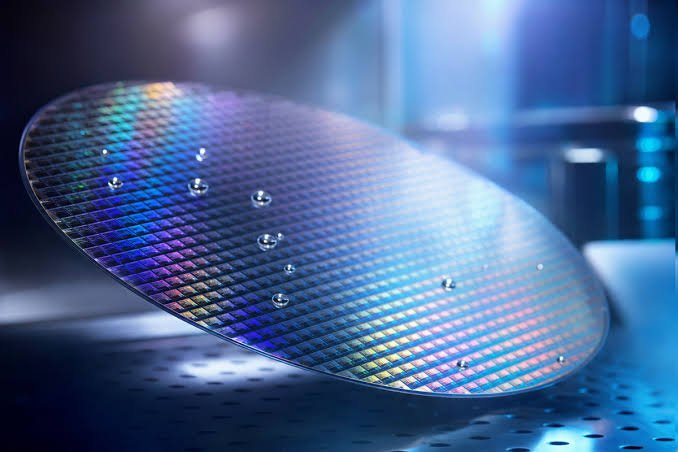
1. Introduction: The AI Boom Is Making Memory Shockingly Expensive
Over the past twelve months, the global memory market has experienced one of the most violent pricing shocks in semiconductor history. High-capacity DDR5 memory kits have recorded year-over-year price spikes of up to 500%, while specialized 128GB consumer and workstation configurations have skyrocketed from historical lows near $329 to over $3,399—a tenfold increase that has caught builders, OEMs, and enterprise buyers flat-footed.
This is not a temporary supply-chain bottleneck or a standard consumer upgrade cycle. The global DRAM market is undergoing a structural reallocation driven by enterprise artificial intelligence.
2. How Much Have Memory Prices Actually Increased?
Tracking memory market data requires distinguishing between year-over-year (YoY) increases and increases from historical trough pricing.
A 500% price increase indicates that a product is selling for six times its original price (e.g., an increase of $500 on a $100 baseline yields a $600 final price).
Retail data from hardware tracking indices reveals that capacity tier directly correlates with the severity of the price escalation:
| Memory Category | Historical Low Price | August 2025 Average | August 2026 Spot Price | YoY Change (%) | Change vs. Low (%) |
| DDR5-5600 32GB (2×16GB) | $72 | $116 | $528 | +355% | +633% |
| DDR5-6000 32GB (2×16GB) | $72 | $108 | $572 | +429% | +694% |
| DDR5-6000 64GB (2×32GB) | $159 | $222 | $1,272 | +473% | +700% |
| DDR5-6000 96GB (2×48GB) | $189 | $310 | $1,799 | +480% | +851% |
| DDR5-6400 128GB Kit | $329 | $580 | $3,399 | +486% | +933% |
| DDR4-3200 32GB (Legacy) | $59 | $65 | $179 | +175% | +203% |
The surge is not isolated to North America. European tracking shows an average system-memory increase of 345% over the same period, while Asian wholesale hubs report spot-market premiums exceeding 400% on high-density unbuffered and registered ECC modules.
3. Why Are Memory Prices Surging?
The surge is driven by four structural forces across enterprise computing and semiconductor fabrication:
3.1 AI Data Centers Consume Memory at Multiple Layers
Modern AI server clusters demand memory across several architectural tiers:
- Accelerator Memory (HBM3e / HBM4): Attached directly to GPUs and NPUs to supply high-bandwidth weight streaming.
- Host System DRAM (DDR5 RDIMMs): Modern dual-socket AI host nodes (supporting 8-way GPU chassis) carry between 1.5TB and 3TB of DDR5 system memory to stage datasets, manage context pipelines, and handle host-to-device transfers.
- Inference Caching Tiers: Expanding context windows and persistent agent memory rely on high-capacity memory pools to avoid latency-heavy storage retrieval.
3.2 Manufacturers Are Prioritizing High-Margin AI Products
The global memory oligopoly—Samsung, SK hynix, and Micron—operates on wafer allocation models that prioritize high margins. High-Bandwidth Memory (HBM) and high-density server RDIMMs command significant profit premiums over standard consumer DDR4 and DDR5. Consequently, cleanroom allocations have systematically pivoted toward enterprise lines, leaving consumer and baseline enterprise DRAM supply constrained.
3.3 HBM Consumes Disproportionate Wafer Capacity
HBM production requires vertically stacking DRAM dies using Through-Silicon Vias (TSVs) and advanced packaging.
Due to larger die sizes, complex geometries, and stringent yield thresholds, producing 1 gigabyte of HBM requires roughly 3 to 4 times the wafer capacity of 1 gigabyte of standard DDR5 memory. Every wafer committed to HBM stack manufacturing removes the equivalent of three to four wafers from the conventional DDR4/DDR5 supply chain.
3.4 Hyperscalers Are Securing Forward Supply
Amazon Web Services, Microsoft Azure, Google Cloud, and Meta have entered long-term capacity agreements (LTAs) that secure substantial shares of memory fabrication lines. These upfront commitments lock in supply for months in advance, leaving secondary system integrators, edge device manufacturers, and retail channels to compete for limited remaining spot output.
4. The HBM Connection: How Accelerators Reshape the DRAM Market
High-Bandwidth Memory (HBM) sits alongside GPU and accelerator dies on an intermediate silicon interposer. AI workloads are bandwidth-constrained; training deep networks or processing large language model tokens requires continuous access to billions of model parameters.
- Bus Width 64-bit per channel
- Peak Bandwidth ~38 – 64 GB/s
- Form Factor Detachable PCB module (DIMM)
- Primary Target CPU Host Subsystems & Servers
- Bus Width 1024-bit+ ultra-wide interface
- Peak Bandwidth Up to 1.2+ TB/s per stack
- Form Factor 3D-stacked die on silicon interposer
- Primary Target AI Accelerators (GPUs & NPUs)
Because HBM provides the memory bandwidth required by leading accelerator architectures, tier-1 memory manufacturers have oriented their research, advanced packaging cleanrooms, and capital expenditures toward HBM output. This strategic focus directly impacts standard DDR5 availability, as leading-edge manufacturing nodes are allocated to AI-specific products.
5. Enterprise AI vs. The Traditional PC Memory Market
The dynamics of enterprise AI procurement diverge sharply from historical PC client patterns:
| Structural Dimension | Traditional PC / Consumer Market | Enterprise AI Infrastructure |
| Primary Workloads | Office productivity, gaming, client OS | LLM training, high-throughput inference |
| Procurement Metric | Bill of Materials (BOM) cost sensitivity | Total Cost of Ownership (TCO) & Compute ROI |
| Deployment Scale | Single-unit retail & OEM batches | Multi-megawatt cluster expansions |
| Price Elasticity | Highly elastic; buyers delay upgrades | Inelastic; capacity bottlenecks impact revenue |
| Memory Profiles | Standard DDR4 / DDR5 UDIMMs | HBM3e, HBM4, 128GB–256GB ECC RDIMMs |
For an enterprise deploying a $40,000 AI accelerator node, a $2,000 increase in host memory is manageable relative to the operational revenue generated by active model endpoints. In contrast, for a consumer building a $1,200 PC, an identical proportional price jump can delay the purchase entirely. Enterprise capital is absorbing available capacity, resetting equilibrium prices across the entire market.
6. The Big Three Memory Manufacturers
The global DRAM and HBM landscape remains an oligopoly controlled by three primary producers:
All three manufacturers have dedicated significant portions of their capital expenditure budgets to advanced packaging facilities and next-generation lithography.
7. Micron’s $10 Billion Boise Research Lab
Underscoring this industry shift, Micron Technology announced a planned $10 billion investment over the next decade in Micron Research Labs, a research institution headquartered at its Boise, Idaho campus.
The scale of this investment reflects how critical memory has become to modern computing. As processor throughput accelerates, memory bandwidth, latency, and power consumption increasingly dictate overall AI system efficiency.
The Boise facility is designed to pursue fundamental innovations in materials science, hybrid bonding, and 3D integration to support future enterprise architectures.
8. Broad Downstream Effects Across Computing
The reallocation of memory wafer production affects the broader computing ecosystem:
- Consumer and Commercial PCs: System integrators face higher Bill of Materials (BOM) costs. Baseline configurations are being adjusted down from 32GB to 16GB to maintain competitive price points.
- Enterprise Servers: Standard enterprise workloads—such as transactional databases, virtualization clusters, and ERP deployments—face elevated procurement costs for registered ECC DDR5 memory.
- Mobile Devices: High-tier smartphones integrating on-device neural processing units (NPUs) require 12GB to 16GB of LPDDR5X, putting upward pressure on flagship pricing.
- Storage and Flash Integration: Enterprise SSDs and NAND flash controllers are seeing secondary pricing pressure as AI data lakes expand their checkpointing storage.
- Cloud Computing Capex: Cloud service providers face higher hardware costs per server, potentially impacting cloud instance pricing and operating margins.
9. The Economics of AI Infrastructure
Memory costs represent an expanding share of AI data center capital expenditures:
The total cost of deploying an AI cluster is increasingly governed by the Memory-to-Compute Ratio:
As context lengths expand and reasoning models generate larger token volumes, memory capacity and bandwidth become critical architectural determinants of cluster productivity.
10. When Will Memory Prices Normalize?
Memory price cycles are historically volatile, but current market dynamics suggest that elevated pricing will persist longer than in previous cycles:
Industry analysts, including teams at J.P. Morgan and TrendForce, observe that expanding semiconductor fabrication requires multi-year lead times. Constructing cleanrooms, securing extreme ultraviolet (EUV) lithography systems, and achieving stable packaging yields typically requires 24 to 36 months. Consequently, material relief in commodity DRAM pricing is unlikely before next-generation manufacturing facilities achieve volume production.
11. Cyclical Shortage or Structural Shift?
A central debate in the semiconductor industry is whether the current environment represents a standard cyclical peak or a permanent structural realignment:
The Case for a Cyclical Peak
- Capacity Overcorrection: Memory markets historically oscillate between severe shortages and acute oversupply. Simultaneous capacity expansions across the top three suppliers could eventually produce a supply glut.
- Packaging Yield Improvements: As advanced packaging and hybrid bonding yields mature, the wafer-waste overhead for HBM production will decline.
The Case for a Structural Shift
- Higher Baseline Demand: Unlike crypto mining or pandemic-era consumer hardware spikes, enterprise AI infrastructure requires recurring, long-term capital deployments.
- Persistent Bandwidth Bottlenecks: Frontier AI architectures demand progressively higher memory-to-compute ratios, keeping memory at the core of hardware spending.
12. Strategic Implications for the Technology Sector
13. Frequently Asked Questions
Why are memory prices increasing so rapidly?
Memory prices are rising due to high demand from enterprise AI data centers, which require large volumes of High-Bandwidth Memory (HBM) and high-density server DDR5, combined with limited wafer supply.
Is AI directly responsible for rising consumer PC RAM prices?
Yes. HBM requires 3 to 4 times the wafer capacity of conventional DDR5. When foundries dedicate production lines to HBM, standard DRAM supply contracts, raising prices across retail channels.
What is the difference between HBM and standard DDR5?
DDR5 is modular memory mounted on a circuit board and connected via a traditional bus interface. HBM consists of vertically stacked DRAM dies connected through silicon interposers directly to processors, delivering significantly higher memory bandwidth.
Why have 128GB DDR5 kits experienced the largest price increases?
High-capacity kits use dense 32Gb dies and stringent qualification bins that overlap directly with the production lines used for enterprise server RDIMMs, exposing them to the sharpest supply constraints.
Which companies manufacture most of the world’s memory?
Over 90% of global DRAM and HBM output is produced by three companies: Samsung Electronics, SK hynix, and Micron Technology.
How does Micron’s new Boise research lab fit into this landscape?
Micron is investing $10 billion over a decade to establish dedicated research facilities focused on next-generation memory architectures, materials science, and advanced packaging for future computing systems.
Are older DDR4 prices also increasing?
Yes. As DDR5 prices climbed, demand shifted toward older platforms, raising DDR4 prices by 120% to 180% year-over-year.
How much memory does an AI server require?
A modern 8-GPU AI server node typically incorporates 1.5TB to 3TB of high-speed host DDR5 system memory in addition to 768GB to 1.1TB+ of dedicated HBM directly on the accelerator packages.
When are memory prices expected to stabilize?
Market forecasts indicate supply will remain tight through 2026, with potential stabilization beginning in 2027–2028 as new fabrication plants and cleanrooms come online.
Will memory remain permanently more expensive?
While cyclical adjustments will occur as new foundries open, the higher baseline demand generated by AI infrastructure has elevated the long-term strategic and economic floor of the memory market.
14. Conclusion
The 500% surge in memory prices over the past year marks a fundamental shift in semiconductor manufacturing economics. As hyperscalers build out large-scale AI infrastructure, the memory market has transitioned from a cyclical commodity business into a strategic pillar of global computing.
The reallocation of wafer fabrication toward high-bandwidth architectures has tightened supply across the entire computing stack. The enterprise AI boom is doing more than driving demand for accelerators—it is reshaping the economics of memory itself.
1 thought on “Memory Prices Surge by 500% in One Year as Enterprise AI Boom Consumes Global Supply”